Walk up 48th Place on a Sunday around 9:30 and you'll find the same tables you always find: a farmer weighing out peaches, a woman restocking sourdough, somebody's dog waiting patiently by the empanada stand. Regulars barely glance at the building rising behind the tents anymore. If you tuned out of the Palisades news cycle sometime around 2020 and are only now looking up, that building is worth a second look. It took six years, a piece of city legislation, and one of the stranger historic-preservation fights DC has seen to get built. And now that it's finished, the thing everyone worried it would disrupt is the one thing that didn't move an inch.
Six years is a long time to wait for a building
The Safeway at 4865 MacArthur Boulevard had been a fixture since 1941. When the company announced it would close on May 4, 2019, it left the Palisades without a full grocery store west of Wisconsin Avenue, a fact that Greater Greater Washington pointed out would send residents on a two-mile trip to the next-closest Safeway.
The closure itself came wrapped in a strange bit of legal maneuvering. Safeway had tried once before, back in 2014, to attach a covenant to the property that would have blocked any future grocer from operating there, a move that pushed Ward 3 Councilmember Mary Cheh to introduce what became the Grocery Store Covenant Prohibition Act of 2018. Then, in early 2019, Safeway filed for historic designation on its own building, a preemptive move designed to keep neighbors from doing the same thing and tying up redevelopment. The Historic Preservation Review Board agreed the building wasn't historic, and the path to redevelopment opened up.
What came next moved slowly. A short timeline, for anyone catching up:
- 2019: Safeway closes, ground lease transfers to Trammell Crow Company.
- 2020: Trammell Crow shares early plans for up to 120 senior housing units across two buildings, with 4,000 square feet of retail and an outdoor plaza designed to let the farmers market expand around the corner.
- 2021 to 2024: Design work, permitting, and utility relocation stretch on, with construction crews working their way from 48th Place to MacArthur Boulevard, then U Street and V Street.
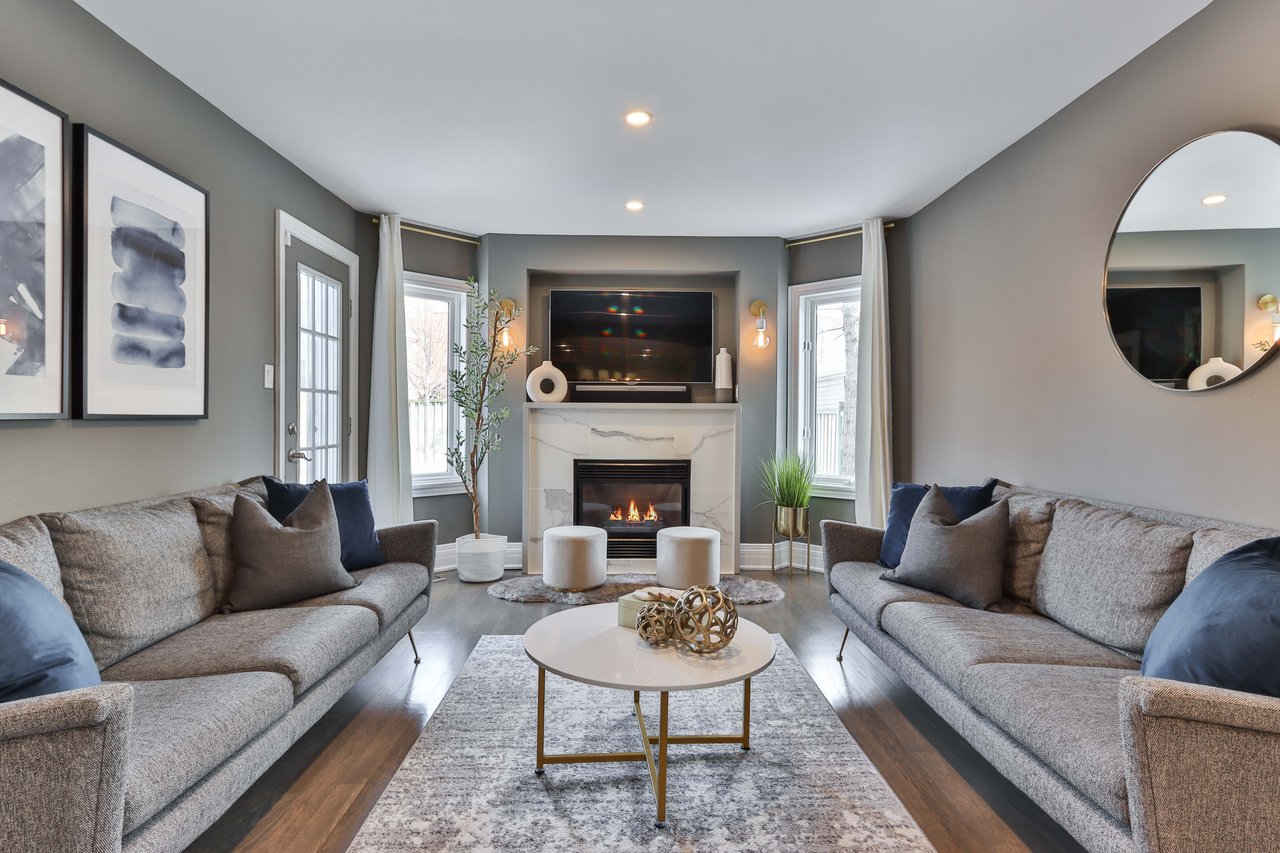
- 2025: The finished project opens as The Fitzgerald of Palisades, delivering 138 apartment homes, more than the original 120-unit pitch, across studios, one- and two-bedrooms, dens, and penthouse layouts.
Six years between an empty grocery store and a finished building is a long stretch for a two-block commercial strip to sit half-boarded up. It's also, by DC redevelopment standards, not unusual. What is unusual is what the neighborhood got on the other end of it.
What finally went up
The Fitzgerald leans into the Palisades' own architectural memory rather than importing something foreign to it. The design draws on local Art Deco landmarks: the old Glen Echo Amusement Park, the MacArthur Theater that once anchored the neighborhood's main strip, and the Kennedy-Warren apartment building. Ten of the 138 units are reserved through DC's Inclusionary Zoning program.
It's a senior living community, not a grocery store, which was not the outcome most of the 2019 coverage predicted. The retail space the community had pushed for made it into the final plans, and the site's identity as a food-access point survived, just not in the form of aisles and checkout lines.
The market that never left
Here's the detail that matters if you live within walking distance and haven't been paying attention: the Palisades Farmers Market didn't relocate, didn't pause for construction, and didn't get squeezed out by the new building. It runs the same way it always has, every Sunday from 9 a.m. to 1 p.m., at 48th Place and MacArthur Boulevard, a spot it's held since a group of PCA volunteers founded it in 2008 with six farmers selling only in summer. It's grown into a year-round, growers-only market with produce, meat, bread, and the kind of artisan street food stalls that turn a grocery run into a Sunday ritual.
What's changed is the backdrop. As one recent industry writeup put it, "the sidewalk outside The Fitzgerald comes alive with a local Farmers Market" every week now, a description that would have sounded odd in 2019 when that sidewalk fronted a shuttered grocery store with paper over the windows. The market outlasted the thing it used to sit next to and is now, in effect, part of the new building's front porch.
Down the street, a second homecoming
MacArthur Boulevard has had one other reopening worth knowing about, and it's easy to miss if your radar is only tuned to big construction projects. Salt & Pepper, the restaurant that used to occupy 5125 MacArthur Boulevard, gave way in late 2024 to Conduit Road Public House, a neighbor-run American spot that's since settled into the kind of place where trivia night, live music, and a standing Mahjong game are all part of the regular rotation. The restaurant's own tagline calls it a place built by neighbors for neighbors, which tracks with a name that reaches back further than most people realize: MacArthur Boulevard was called Conduit Road from the early 1800s until 1942, back when the road's only job was maintaining the aqueduct that still supplies the city's water.
One practical note before you plan a weeknight around it. Conduit Road's own site currently lists the restaurant as closed for the entire month of August. If you've been meaning to try the ribeye or catch a trivia night, this month isn't it. Circle back in September.
Same rituals, new backdrop
The version of this story that got written in 2019 was about loss: a food desert forming, a community landmark disappearing, a neighborhood watching its main commercial anchor turn into a construction site with no clear timeline. Six years is enough time for that story to calcify into "the Palisades doesn't really change." It's also enough time for the actual outcome to prove that framing wrong in a more interesting way than anyone predicted. The corner didn't stay empty. It didn't turn into something unrecognizable either. The market that's been running since 2008 is still running on the same schedule, just with the finished version of a building the neighborhood spent years arguing over as its backdrop.
If you're the kind of person who wants the real story behind what's changing on your block, not the aggregated version three other sites already ran, that's the read Emily Sower tries to give you. Call or text if you want the rundown on what else is shifting along MacArthur Boulevard, or grab the free Palisades neighborhood guide for a fuller picture of the strip.